
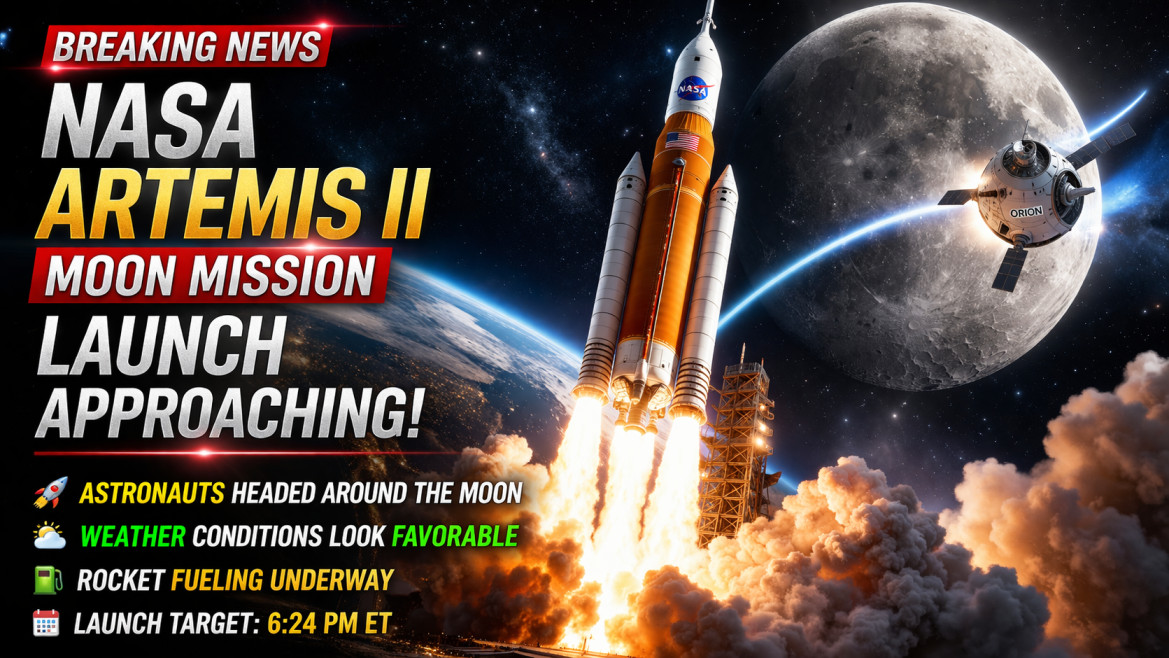
NASA Artemis II Moon Mission is preparing for a historic launch as global attention turns toward the next major step in human space exploration. The mission, led by NASA, aims to send astronauts on a journey around the Moon for the first time in decades.
As part of the ambitious Artemis Program, this mission will mark the first crewed flight following the successful test of Artemis I. Scientists and space enthusiasts around the world are closely watching the progress of the upcoming launch.
If everything proceeds as planned, the mission could open the door for future lunar landings and deeper space exploration.
The NASA Artemis II Moon Mission marks a major step toward returning humans to the Moon.
NASA Artemis II Moon Mission Launch Update
In recent social media updates, NASA revealed that preparations for the Artemis II mission are progressing steadily. Teams have been working around the clock to prepare the rocket and spacecraft for launch while monitoring weather conditions.
Action. Wonder. Adventure. Artemis II has got it all. Don’t miss the moment. Our crewed Moon mission will launch as early as April 1.
Learn how to watch: https://t.co/fAg0bGAqEc pic.twitter.com/2uhg8EhwTv
— NASA (@NASA) March 30, 2026
The announcement highlighted the excitement surrounding the mission, describing it as a moment filled with action, wonder, and adventure. NASA also shared information on how people around the world can watch the historic launch live.
Weather Conditions Look Favorable for Liftoff
Weather plays a crucial role in any rocket launch. Even small changes in atmospheric conditions can delay or reschedule missions.
However, the latest updates indicate that weather conditions are looking promising for the Artemis II launch. NASA’s technical teams have continued preparing the rocket as forecasts show mostly favorable conditions.
🚨 The decision is in—Artemis II is a go. Launch is scheduled for 6:24 p.m. ET tonight as NASA begins full fueling operations, with weather currently 80% favorable.
— Breaking911 (@Breaking911) April 1, 2026
The update suggests that the mission teams are optimistic about the launch window, which could allow the rocket to lift off as planned.
Launch Scheduled as Fueling Operations Begin
According to additional updates circulating online, the mission has officially received the “go” decision for launch, with fueling operations already underway.
The rocket is expected to launch at 6:24 p.m. Eastern Time, depending on final technical checks and weather conditions.
The weather’s looking good for tomorrow’s Artemis II launch, and our teams are getting the rocket ready for liftoff!
Read the latest updates on our mission around the Moon: https://t.co/doIjUqa1cx pic.twitter.com/TtoI6FIkvl
— NASA (@NASA) March 31, 2026
Fueling operations involve loading massive amounts of cryogenic fuel into the rocket. This process is one of the most complex stages of launch preparation and is carefully monitored by mission engineers.
Spacecraft and Rocket Behind the Mission
Astronauts participating in the mission will travel aboard the Orion spacecraft, which is specifically designed for deep-space exploration.
The spacecraft will be launched using the powerful Space Launch System, currently the most powerful rocket built by NASA.
Unlike earlier missions that stayed in low Earth orbit, Artemis II will carry astronauts around the Moon and back to Earth, testing critical systems required for long-duration space travel.
Experts say the NASA Artemis II Moon Mission could open a new era of deep-space exploration.
Building on the Success of Artemis I
The Artemis II mission follows the success of Artemis I, which successfully demonstrated that the rocket and spacecraft could travel to the Moon and return safely.
Artemis I was an uncrewed test mission, meaning no astronauts were onboard. Artemis II will take the next major step by placing astronauts inside the Orion spacecraft and sending them on a lunar flyby mission.
This will allow NASA engineers to evaluate life-support systems, navigation technologies, and communication systems in real mission conditions.
Preparing for Humanity’s Return to the Moon
The Artemis program is not just about sending astronauts around the Moon. NASA’s long-term vision is to establish a sustainable human presence on the lunar surface.
The next major milestone in the program is expected to be Artemis III, which aims to land astronauts on the Moon for the first time since the historic Apollo 17 mission in 1972.
If Artemis II succeeds, it will bring humanity one step closer to that goal.
Global Attention on the Artemis Program
Space enthusiasts, scientists, and researchers around the world are closely following developments related to the Artemis program. The mission represents a major technological achievement and signals the beginning of a new era of human exploration beyond Earth.
The success of Artemis II could also pave the way for future missions not only to the Moon but eventually to Mars and other deep-space destinations.
If successful, the NASA Artemis II Moon Mission will help prepare astronauts for future lunar landings.
Conclusion
The NASA Artemis II Moon Mission is shaping up to be one of the most historic space events of the decade. With weather conditions looking favorable and fueling operations underway, the mission appears closer than ever to liftoff.
If the launch proceeds as planned, Artemis II will mark a powerful step forward in humanity’s journey back to the Moon and the future of deep-space exploration.
For more global space updates and breaking news, readers can also explore our latest reports on