
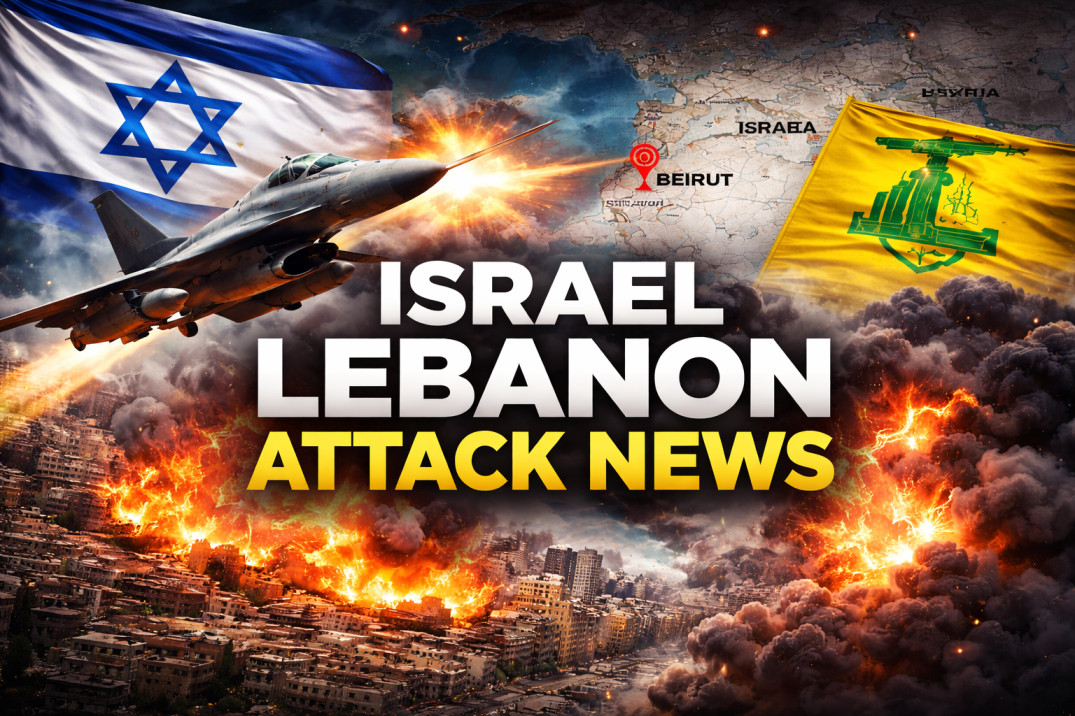
Israel Lebanon Attack News has once again drawn global attention as tensions in the Middle East increased shortly after a ceasefire discussion between the United States and Iran. Even as diplomatic talks were aimed at reducing conflict in the region, Israel launched new airstrikes targeting Hezbollah positions inside Lebanon.
The development has raised several questions about the timing of the attack and whether it could affect broader peace efforts in the region.
What Happened in the Latest Israel Lebanon Attack News
According to international reports, Israeli fighter jets launched strikes in southern Lebanon and the Bekaa Valley. The attacks targeted locations believed to be used by Hezbollah, including:
- Weapons storage sites
- Rocket launch areas
- Command centers
Local sources reported damage and injuries, though full details are still emerging. This Israel Lebanon Attack News shows that tensions are still very active despite diplomatic efforts.
Israel launched the deadliest attack on Lebanon since the war intensified in March and we explore whether the US-Iran ceasefire agreement will hold ahead of the peace talks in Pakistan on Saturday.
Al Jazeera’s @Marahrayan with the latest. pic.twitter.com/VU7EUBwWrM
— Al Jazeera English (@AJEnglish) April 9, 2026
Why Did Israel Attack After the US-Iran Ceasefire?
One of the most discussed aspects of the Israel Lebanon Attack News is the timing. The airstrikes happened shortly after discussions about a temporary ceasefire between the United States and Iran.
Security analysts say the ceasefire discussions mainly focused on preventing direct conflict between Washington and Tehran. According to Israeli officials, the ceasefire proposal did not include Hezbollah or other armed groups operating from Lebanon.
Because of this, Israel believes its military actions against Hezbollah are separate from the ceasefire negotiations.
Some experts also suggest that the strikes may have been carried out as a preventive measure to stop possible rocket or drone attacks that Israel believes Hezbollah could launch in the future.
Israel’s Official Position
Israeli defense officials stated that the operation was designed to target militant infrastructure and reduce potential threats to Israeli civilians.
According to the Israeli military, intelligence information suggested that certain Hezbollah facilities were being used to prepare attacks against Israeli territory. Officials say the airstrikes were aimed at neutralizing those threats before they could materialize.
Israel has repeatedly stated that it will respond to any security threats coming from across its northern border with Lebanon.
Hezbollah’s Response
Following the Israeli strikes, Hezbollah issued statements condemning the attacks. The group warned that it has the right to defend its territory and could respond if attacks continue.
Some reports also suggested that rockets were fired toward northern Israel shortly after the airstrikes. However, the situation remains tense and continues to evolve.
International observers say that if the cycle of attack and retaliation continues, the conflict could escalate further.
Key Points of the US-Iran Ceasefire Proposal
Diplomatic sources indicate that discussions between the United States and Iran included several proposals aimed at reducing tensions. Some of the reported points include:
- A halt to direct military attacks between the United States and Iran.
- A temporary ceasefire period lasting around two weeks.
- Diplomatic negotiations to reduce regional tensions.
- Protection of global oil shipments through the Strait of Hormuz.
- Discussions about easing certain economic sanctions on Iran.
- Allowing humanitarian assistance in affected areas.
- Continued international mediation to support stability.
- Talks on broader regional security arrangements.
- Avoiding direct military confrontation between the US and Iran.
- Exploring a long-term diplomatic agreement for regional peace.
Experts note that these proposals mainly focus on US-Iran relations and do not automatically apply to conflicts involving Israel and Hezbollah.
What Could Happen Next?
The latest Israel Lebanon Attack News highlights how fragile the security situation in the Middle East remains. While diplomatic efforts between major powers aim to reduce tensions, regional conflicts continue to create uncertainty.
Many international organizations and governments are calling for restraint and encouraging diplomatic dialogue to prevent further escalation.
According to reports, Israeli airstrikes targeted Hezbollah positions in Lebanon.
The ceasefire talks mainly focused on reducing tensions between the US and Iran.
Conclusion
The recent Israel Lebanon attack shows that even with ongoing ceasefire discussions between the United States and Iran, tensions in the Middle East are far from resolved. The conflict involving Israel and Hezbollah remains one of the most sensitive security issues in the region.
Experts believe that sustained diplomacy and international cooperation will be necessary to prevent the situation from turning into a wider regional conflict.